HR Chatbot vs AI HR Assistant: The Difference Between an Answer and an Action
An HR chatbot answers questions. An AI HR assistant can make the change for you. What separates them, and the safeguards an assistant that acts needs.
The short answer: an HR chatbot answers questions, usually from a handbook or an FAQ, and sends you somewhere else to act. An AI HR assistant reads your live HR records and can make the change for you, such as booking leave, filing an expense or setting shifts. That makes an assistant more useful, and it means it needs stronger safeguards: it should act only with your own permissions, and show you each change before it happens.
The words get used loosely. Vendors call almost anything with a chat box an "HR chatbot", an "AI HR assistant", an "HR virtual assistant" or an "HR agent". The label matters less than two questions: where do its answers come from, and can it change anything?
What an HR chatbot does
A typical HR chatbot is a question-and-answer layer over your HR knowledge. You ask "how many sick days do we get?" or "what is the parental leave policy?", and it finds the relevant passage in the handbook and answers in plain language.
That is genuinely useful. It takes repetitive questions off the HR inbox, it is available at any hour, and because it only reads policy documents, it carries little risk.
Its limits show up the moment the answer depends on you:
- "How much leave do I have left?" A handbook cannot answer that. Your balance lives in the HR system.
- "Book Friday off." A chatbot can tell you how to request leave. It cannot request it.
- "Who on my team is away next week?" That is live data, and it depends on what you are allowed to see.
So the conversation ends with a link: "You can request leave in the HR portal." You open another screen and do the work yourself.
What an AI HR assistant does
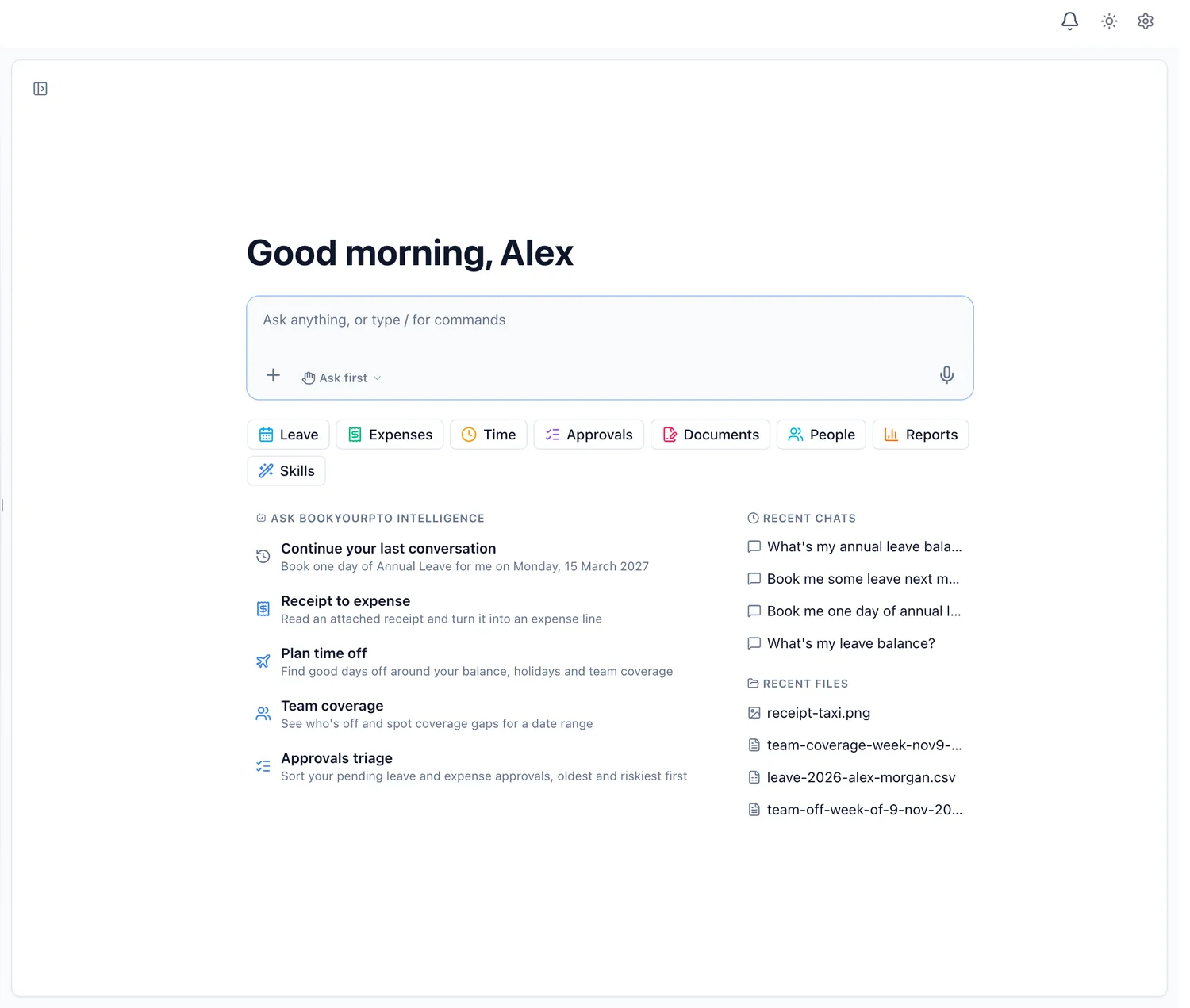
An AI HR assistant works inside the HR system rather than beside it. It answers from live records: your balance, your team's leave, the claims waiting for you, next week's shifts. And it can carry out the request.
Some examples from BookYourPTO Intelligence:
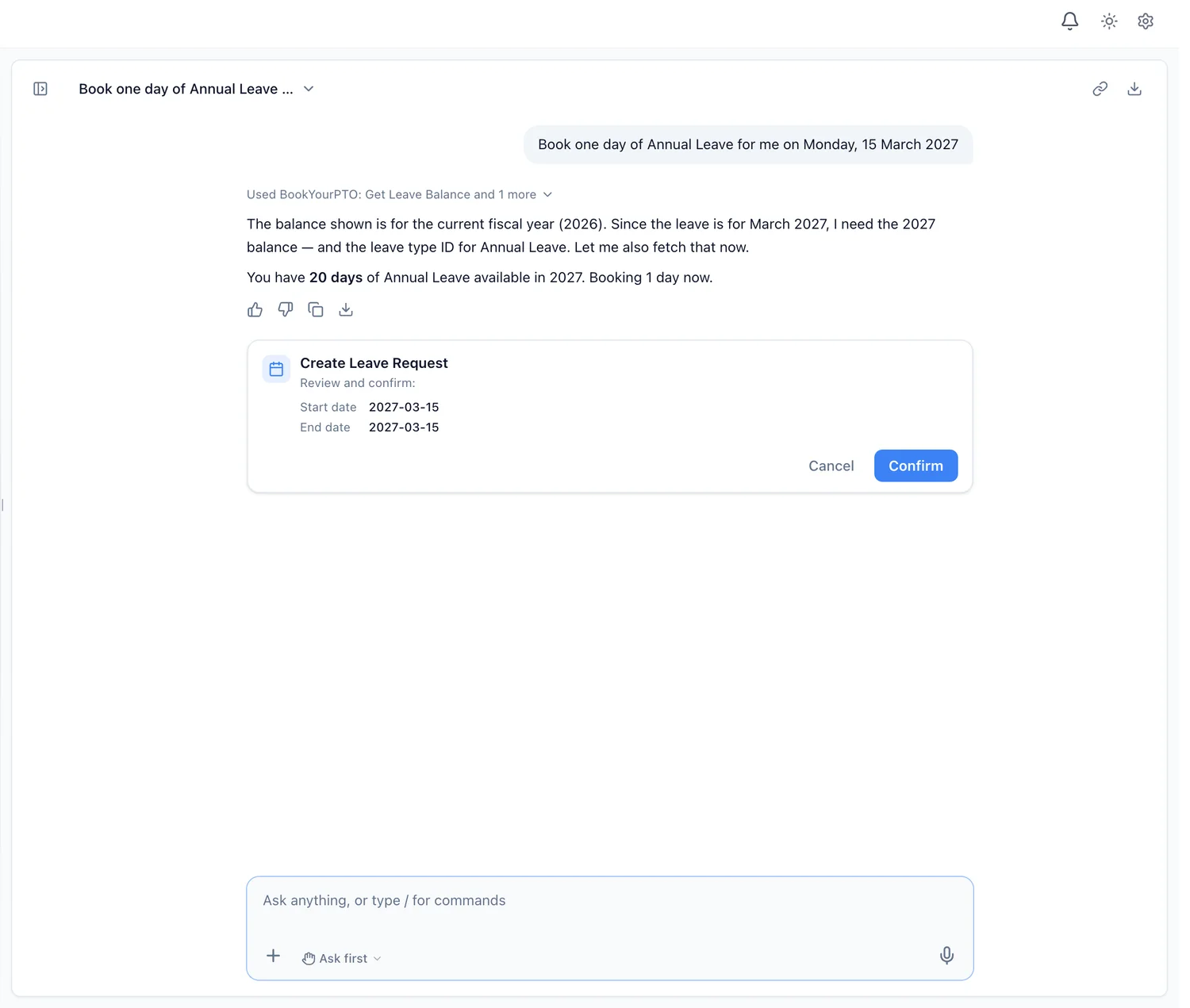
- "Book one day of annual leave for me on Monday, 15 March." It checks your balance for the right year, then shows a leave request card. Nothing is booked until you press Confirm.
- "Add this receipt to my expenses." You attach a photo or PDF. It reads the vendor, date, taxes and total, and files a draft expense with the receipt attached.
- "Go through my pending approvals." For a manager, it lists pending leave and expense requests oldest and riskiest first, and points out overlaps and missing receipts. Each approval waits for the manager's yes.
- "Compare leave taken by department this year." It looks the numbers up and returns a table and a chart, which you can download as a CSV or a PDF.
The difference is not cleverer language. It is that the assistant is connected to the system of record, and can act in it.
Side by side
| HR chatbot | AI HR assistant that acts | |
|---|---|---|
| Answers from | A handbook, FAQ or knowledge base | Live HR records, plus policy |
| Personal questions ("my balance") | Usually cannot answer | Answers from your record |
| Can make changes | No; links you to a page | Yes, after you approve |
| Access it needs | Read access to documents | Your permissions in the HR system |
| Main risk | A wrong or outdated policy answer | A wrong change, or seeing too much |
| Safeguards that matter | Accurate, current sources | Permissions, approvals, audit |
Why an assistant that acts needs stronger safeguards
A chatbot that gets something wrong gives you a bad answer. An assistant that gets something wrong could book the wrong dates, approve the wrong claim or show a manager something they should not see. So the safeguards have to be part of how it works, not a line in a privacy policy.
It should only have your permissions
The single most important design choice is whose access the assistant uses. If it runs on a shared account that can see every record, then anyone with a chat window can ask for anything, and the only thing standing in the way is the model's judgement.
In BookYourPTO, the assistant has no access of its own. It works through the signed-in person's own permissions and the same checks the app applies on its pages. An employee's assistant cannot read a colleague's private records. A department head's cannot reach another department. Nobody's can reach another organization.
It should show you the change first
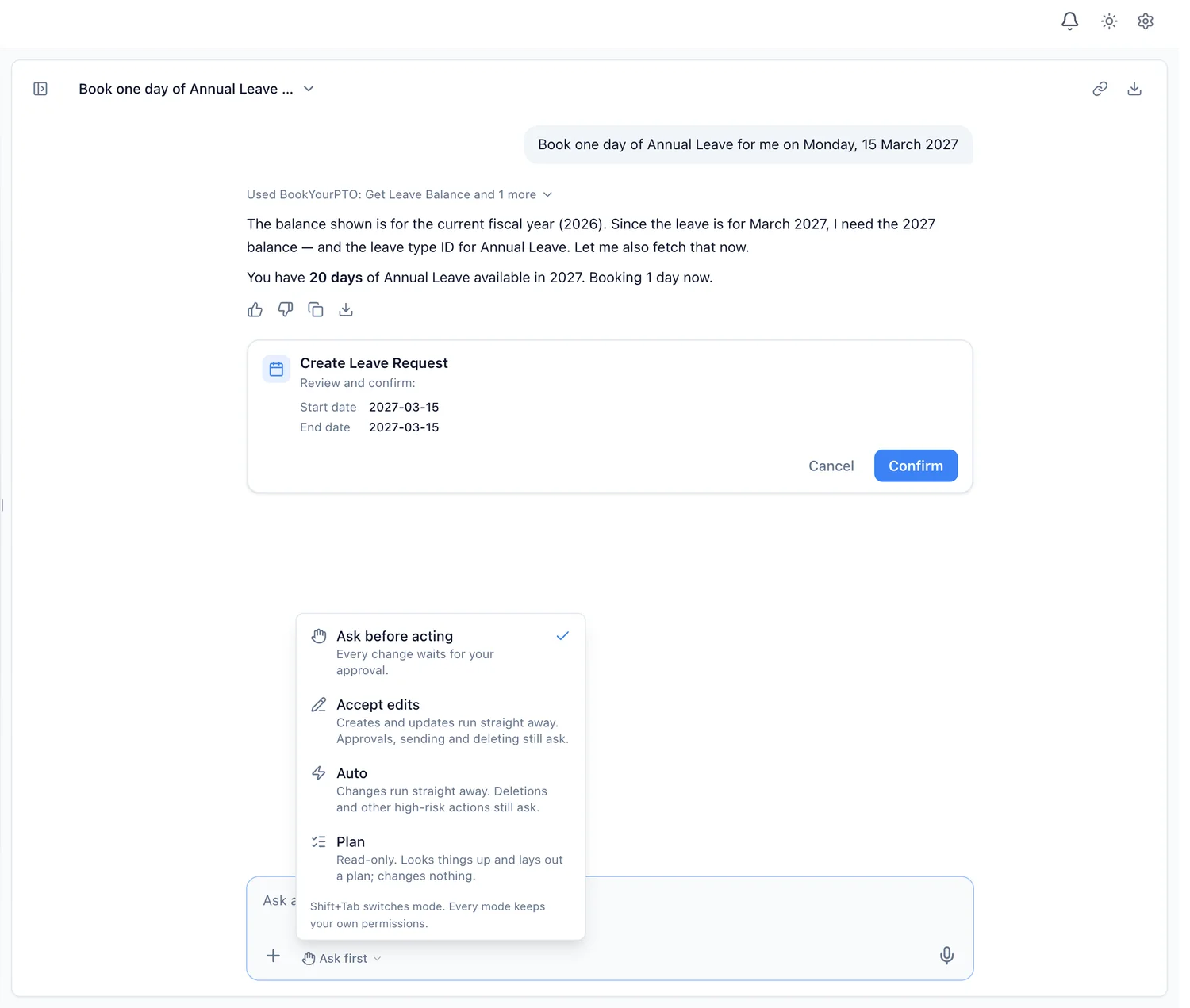
Before anything changes, you should see what will change. In BookYourPTO's default mode, Ask first, every change arrives as a card with the details, and nothing happens until you confirm. People who want fewer clicks can choose Accept edits, which lets creates and updates run, or Auto, which runs changes except high-risk ones. Plan keeps it read-only.
Some actions should always ask
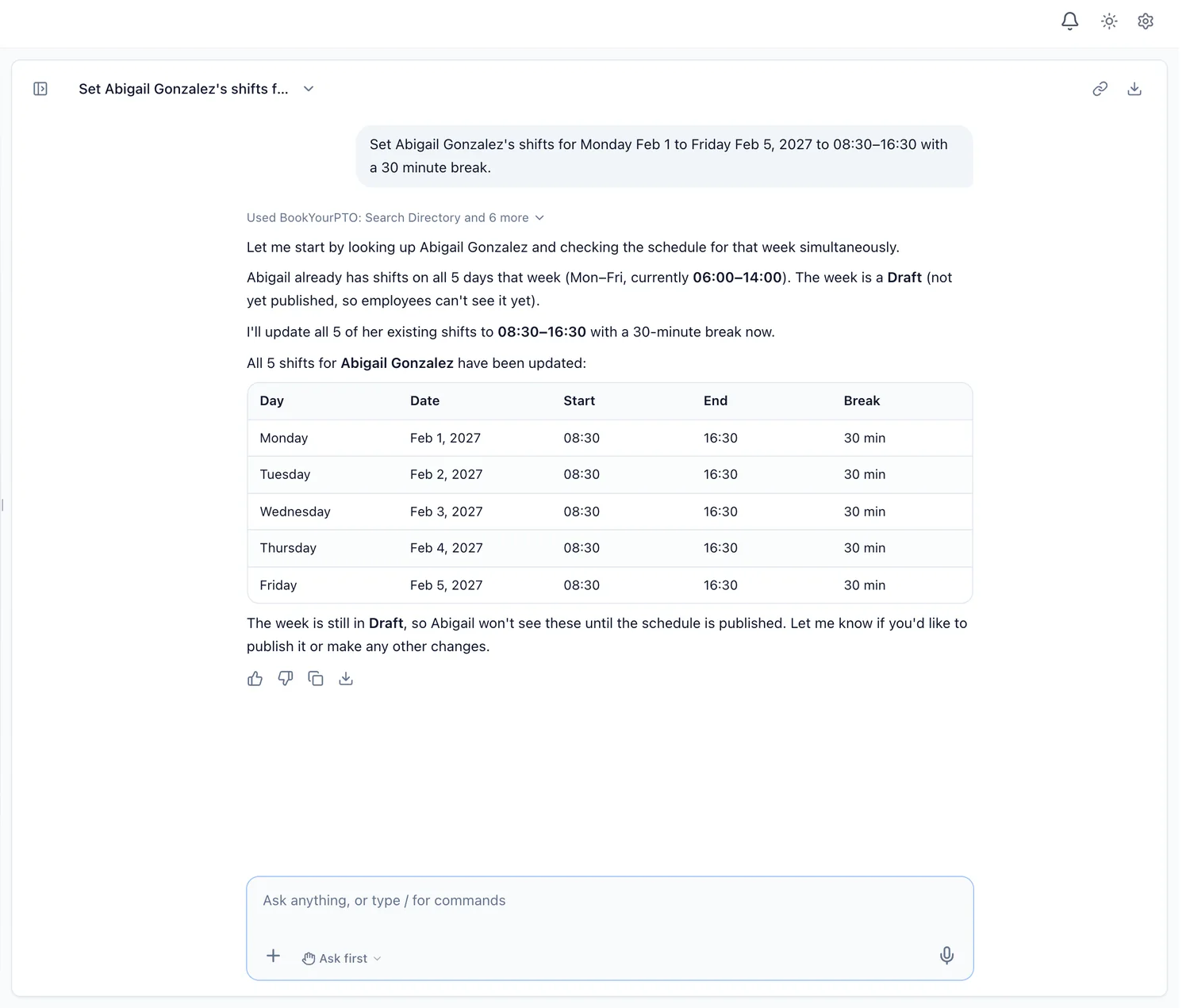
Deleting a record, offboarding someone or making a bulk change is hard to undo. In BookYourPTO these ask for approval in every mode, including Auto. Changing a schedule week that employees can already see also always shows an approval card.
Text in records is not an instruction
An assistant that reads documents and records can be tricked by text planted inside them, a technique called prompt injection. A well-built assistant treats everything it reads as information, never as orders. BookYourPTO's assistant also flags likely misuse, such as requests for system secrets or another organization's data, and records it for administrators to review.
Which do you need?
If your main problem is a flood of repetitive policy questions, a chatbot over a good handbook will help.
If your problem is the time people spend inside the HR system, such as finding balances, filing claims, checking coverage, approving requests and building rotas, a chatbot only moves the question. An assistant that can act removes the work, provided it has the safeguards above.
For most small and mid-size teams, the second problem is the bigger one. The policy is a page people read once. The balance, the request and the rota are things they deal with every week.
Questions to ask before you choose
- Does the AI answer from live records, or only from documents?
- Can it make changes, and do I see each change before it happens?
- Does it use each person's own permissions?
- Which actions always require approval?
- Are our conversations used to train AI models? (In BookYourPTO, they are not.)
For a wider view of the category, read our guide to AI HR software, or what it means for an assistant to act on its own in Agentic HR Explained.
Written by
AnHourTec Team